
Course Entry Requirements
Suitability for the courses is dependent on previous education and skills, taken together with life experience.
A good general academic background (this usually means full time education to age 18 at least) is assumed for those intending to teach in the Lower School.
Schools with Upper School teaching vacancies usually require graduates in their respective subjects. In both cases, this enables all curriculum sessions to concentrate their limited time on what is specifically 'Waldorf' in teaching.
A certain familiarity with or willingness to become familiar with the anthroposophical background of Waldorf education is also essential.
Contact us
Our teacher training courses The Teacher Training Seminar aims to provide a foundation in the fundamentals of Steiner Waldorf education that is essential for anyone who wishes to teach in a Steiner Waldorf school.

The course is structured around three main strands:
-
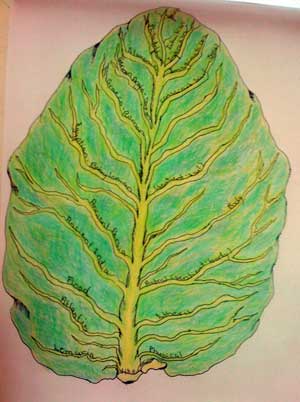 Artistic development of the student (Teacher development). Steiner identified the three basic studies of Modelling, Music and Speech as essential for developing the skills and personal qualities needed. Music, in the form of singing, music theory and recorder playing, and speech in recitation, story-telling and drama are given as well as clay modelling. In addition, the course offers regular sessions in painting, drawing and handwork as well as various other artistic activities from time to time.
 - Anthroposophical study - study of Steiner’s education and other lectures to support and deepen understanding of Anthroposophy as the basis of Steiner Waldorf education. Essential texts are The Education of the Child in the Light of Anthroposophy and The Study of Man (The Foundations of Human Experience) and these have been supplemented at various times by The Kingdom of Childhood, Waldorf Education for Adolescents, The Spirit of the Waldorf School, Practical Advice to Teachers and Discussions with Teachers, as well as individual lectures and passages from other books and lecture cycles, chosen by individual tutors. Study of lectures on festivals is also an important part of the study curriculum. While these are not studied directly on the course, students are encouraged to read Steiner’s basic books Knowledge of the Higher Worlds (How to Know Higher Worlds), Theosophy and Occult Science (Esoteric Science) to gain a good grounding in Anthroposophy.
-
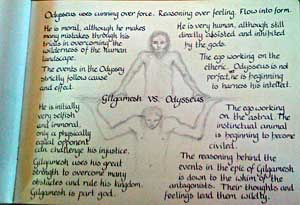 Child Development - in-depth study of the development of human consciousness in the individual and how its parallel in history is reflected in the curriculum to support the child at each stage. This includes a broad picture of the curriculum from this point of view, e.g. how the music, history, geography, maths (etc.) curriculum develops to reflect the child’s changing consciousness at each stage.
These three streams continue throughout the course with a change of emphasis from the first to the second year so that the students gain a good balance of theory and practical knowledge along with their continuing personal development.
In the first year the focus is on study of Child Development, supported by:
- classroom practice so that the students get used to presenting work and speaking.
- artistic development.
- study of Education of the Child plus one or two other texts (see above).
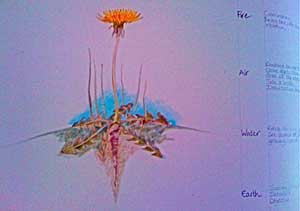 In the second year students work more intensively with putting the theory of Child Development into practice in preparation for school placements and embarking on life as a teacher. This is done through:
- rhythmic work for the classroom
- preparation and presentation of themes for Main Lessons
- specialist lessons (e.g. foreign languages, Science, Learning Support, Upper School)
- particular emphasis on Maths and English teaching
Preparatory reading may be recommended at interview. Parallel reading during the course is also required, together with regular assignments. These, in addition to the 720 contact hours, call for the kind of commitment that is in any case an essential requisite for teaching.
Teaching Observation and Practice
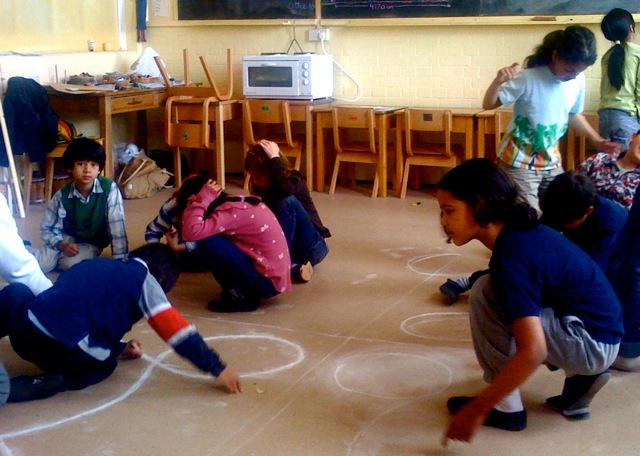
Observation and teaching practice are in addition to the time specified for general seminar work. Observation can be spread out over a period and is usually undertaken during the first year of training. Teaching practice is normally in blocks of not less than three weeks during the second and third terms of the second year. Both observation and practice are mandatory with a minimum of three weeks (fifteen days) for each. However, it is our aim and responsibility to ensure that our students are properly prepared for teaching and so we often make specific recommendations to individuals with regard to the kind and amount of observation and teaching practice they need to do.
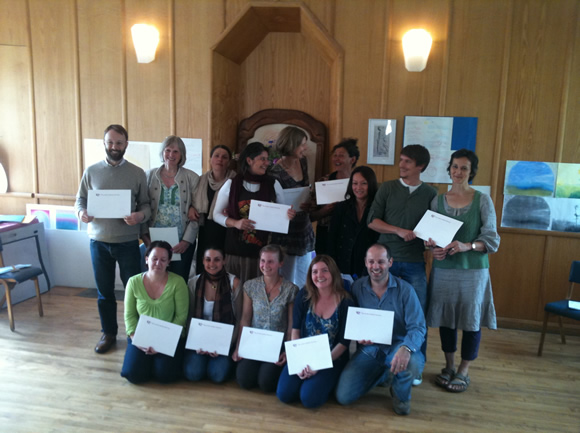


Assessment and Certification
Apply for the The Teacher Training Seminar